Category Archives: Guardian

Russia’s AI challenge

Russia has unleashed a new strategy to boost AI as both a business tool and a military solution. National bank Sberbank has been given a crucial role in building AI strategy and is helping develop a range of supercomputers to aid AI innovation. We look at Sberbank’s launches and assess the future of Russia’s AI industry and its impact across Europe and globally.

By David Benady

IDG Connect | MAR 9, 2021 10:30 PM PST
IDGConnect_russia_AI_artificalintelligence_shutterstock_1490653877_1200x800
Shutterstock

RECOMMENDED FOR YOU

Russia is staking its future on Artificial Intelligence as President Vladimir Putin puts the technology at the heart of the nation’s digital transformation. With the US, China and Europe all investing heavily in AI, the scene is set for a global battle for supremacy. As Putin has said, the nation that leads in AI “will be ruler of the world.”

In a speech to the AI Journey Conference 2020 held in Moscow in December, Putin told 10,000 online delegates that AI is “one of the greatest technologies ever created by humanity.” He promised that AI would become deeply embedded into the nation’s infrastructure as part of a new Russian revolution.

Observers have warned about the use of the technology in military and internal security applications amid fears of a new AI-powered global stand-off. Russia has trialled the Uran-9 unmanned robot tank in Syria and aims to have 30% of combat capability powered autonomously by 2030. But it is in the civil sphere that AI promises a profound transformation of everyday life.

During the event, Putin spent two hours expounding on AI, flanked by former economy minister Herman Gref, who is Chief Executive of Sberbank, Russia’s largest financial institution.

Gref plays a key role in Russia’s AI transformation. Sberbank is a 150-year old institution, half Government-owned and with 100 million customers. The bank is undergoing a dramatic re-invention using AI technology. Sberbank is in the process of launching an eco-system of AI-powered consumer services under the Sber brand, spanning ride-hailing, food delivery, digital assistants and automated banking. 

But as Sberbank’s Chief Technology Officer David Rafalovsky explains: “What makes Sber unique in the financial industry is that we are not only users of technology, we are creators of technology.”

Introducing Christofari

Sberbank has built the powerful Christofari supercomputer, unveiled in December 2019, which allows for the fast processing of AI models. 

One of the world’s 40 fastest supercomputers and the most powerful in Russia, Christofari was developed in association with US chip maker Nvidia. It allows users to train machine learning models using neural networks in a matter of days rather than weeks. This is boosting AI areas such as natural language processing, predictive analytics, computer vision and fraud detection.

Rafalovsky says this has greatly improved the quality of Russian artificial language generation, putting it on a par with anything produced by the US tech giants. Christofari’s natural language processing uses GPT-3, the Generative pre-Trained Transformer model that uses deep learning to produce human like text. This is powering Sber’s digital assistants such as a service called Duet. This is comparable to Google’s Duo, a voice assistant that can book appointments over the phone, interacting with humans. “Only Sber and Google, as far as I know, have the ability (for a digital assistant) to maintain a robust conversation and make a decision on our behalf and I am very proud of that,” he says.

Meanwhile, Sberbank’s commercial loan product known as K7M promises to make loan decisions in seven minutes. While it might take a committee weeks or months of deliberation to give credit to a small business, K7M uses AI to make rapid decisions. “That’s down to many years of investment in AI,” says Rafalovsky. “It’s a lot of work but there’s no magic. It is a model we train over a long period of time with a lot of trial and error. It also involved a lot of parallel execution with humans to see if we were making the right decisions before we launched it in real life,” he says.

A significant feature of Christophari is that Sber hires out usage through its Sber Cloud service, which is like a Russian version of Amazon Web Services.

“A small start-up in Russia can in a few clicks have access to this amazing technological platform,” says Rafalovsky. “We are in the midst of a revolution and the access to AI technology is becoming more democratic.”  

AI for everyone

Sberbank is a founding member of the AI-Russia Alliance, a cross-industry initiative bringing together Sber, Gazprom Neft, search and e-commerce giant Yandex, which runs its own AI-powered eco-system of consumer services. Mail.ru, the email and social network operator, and the Russian Direct Investment Fund are also involved. The Alliance aims to promote AI.

“AI cannot be just accessible to large companies with deep pockets, we have passed that point of development. Everything we are doing through the alliance is aligned with that strategy to make it as democratic as possible,” he says.

According to Elena Semenovskaia, a senior researcher at IDC, Russia has been more successful at embedding AI in industrial rather than consumer applications. Twinned with data from Internet of Things sensors, AI is used in the oil and gas industry to simulate and predict extraction processes. There are digital assistants in metallurgical plants, while AI is being used widely in urban infrastructure. “It is in everything that relates to smart cities and the safe city, so image recognition, facial recognition, analysing different movement patterns,” she says. 

AI development requires advanced hardware, highly skilled data scientists and access to high quality data. “The bottom line is it is expensive,” she adds.

A challenge for Russia is a lack of cleaned, reliable data for analysis that can be used for developing algorithms. “They are just starting to combine internal data with external data from website visits, mobile operator data and retail data, it is in the process. I believe that next year there will be more data ready for writing AI properly.”

Russia has a highly-educated workforce of scientists, mathematicians and statisticians. But Semenovskaia says the country lacks advanced business thinking and needs to train and attract more business intelligence consultants.

AI is rapidly developing self-service applications making it easier for non-professionals to create models and build their own digital assistants and predictive analytics. This will be a world where every desktop has a robot and an AI model builder.  

“To understand the whole business process of the company or organisation, you need people who have good problem-solving skills and good logic and development skills and understand the business,” says Semenovskaia.

As ever, knowing how to process data is just the start. To make AI effective, applying it to solve real-world challenges – from speeding up loan approvals to developing chatbots – is the key. Practical business, logistical and management skills will be vital to achieving Russia’s grand vision for AI.

How a new generation is embracing gender diversity in engineering

How a new generation is embracing gender diversity in engineering

While great progress has been made in the sector over the past few decades, younger people are now leading the charge when it comes to making engineering an inviting field for womenSupported byAbout this content

David Benady

Fri 24 Jul 2020 14.12 BSTLast modified on Fri 24 Jul 2020 14.14 BST

Shares10

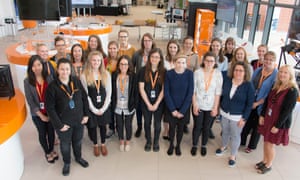
Stem ambassadors at engineering firm Renishaw
 Stem ambassadors at engineering firm Renishaw

When structural engineer Martin Burden first came to the UK from Australia 30 years ago, the engineering profession was thoroughly male-dominated, he says. In his first UK job, there was just one female engineer out of 50 males, while in Australia he hadn’t worked with a single woman engineer.

“It felt like a gentlemen’s club that didn’t want women to be involved. And as a result, they felt that they couldn’t be,” he says. “It’s hard to put your finger on why. It comes down to not being welcome. With science, technology, engineering and mathematics in universities, women didn’t feel like it was something they were naturally steered towards.”

How times change. Today, the majority of the engineers Burden works with are female. In the design office at engineering and architecture company Ramboll, where he is consulting director, about 15 out of 20 engineers are women. He has witnessed a sea change in female participation.

“For entry level design and engineering at the first three or four rungs on the ladder, gender balance is about 50/50,” he says. “But it drops off past the age of 30 or 35 to around 15% higher up the business.”

Martin Burden
 Structural engineer and consulting director Martin Burden says he has witnessed a sea change in female participation in the profession over the past 30 years

Changing engineering’s reputation as a male preserve and making women feel welcome in the profession requires a transformation in the attitudes of both men and women. Engineering firms are putting in place training in unconscious bias to alert men when their thinking and behaviour may unconsciously discriminate against certain groups, including women.

Attitudes of younger male engineers seem a world away from the archaic approaches of the past. Kristian Goodchild, a graduate software engineer at engineering firm Renishaw, believes everyone involved in engineering should focus on the lack of diversity in the field. “Without prolonged thought on these issues, many male engineers would not take the time to consider the lack of diversity in the workplace and the possible reasons why there is a gender imbalance,” he says.

Diversity training, discussion and constant self-questioning are required to identify and deal with examples of bias, he adds.

He says he has noticed subtle – though probably unconscious – “microaggressions” from senior male engineers about female engineers and their ability to do their job. He concedes that similar comments are also made about male engineers, but he wonders whether women are held to higher standards. Even so, he hasn’t experienced substantial gender imbalance, as about 40% of the engineers in his department are women.

Mind the (pay) gap: how to get more women into senior engineering roles

 Read moreAdvertisementhttps://tpc.googlesyndication.com/safeframe/1-0-37/html/container.html

Meanwhile, Jesse Mitchell, who since graduating last year has worked on Renishaw’s mechanical engineering graduate scheme, says he was unaware of the issues of conscious and unconscious bias when he first started his job. But his company has been active in training and educating staff to raise awareness of these factors and how staff should act in the workplace to avoid discrimination.

He says that some of his female engineering friends are apprehensive about the gender imbalance in situations such as meetings or idea sharing sessions. Others are unfazed by the imbalance while some actually enjoy the gender ratio.

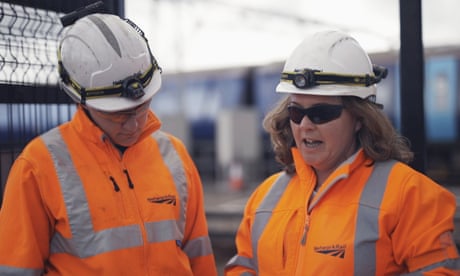
While engineering firms are waking up to the need to increase diversity, an area that has seen little progress is construction sites, where there are still very few women engineers or workers. “The construction environment is not really tailored to women’s needs,” says Burden. An example is the personal protective equipment of hi-vis jackets, helmets and boots. These invariably do not come in women’s sizes and are not designed to fit women. “Women think if I’ve got to go to the site, I’ve got to go through loops and hoops to actually be able to get a piece of kit that makes me feel comfortable. It’s an unconscious thing. If you’re a woman wanting to go to a site, it’s not inviting. It’s not actually set up for you.”

Even so, in most cases, male attitudes to inclusivity have improved – it will take time for young women to see engineering in the same light as more gender-balanced professions such as medicine, media or education. But with men becoming more aware of the issues surrounding gender bias, the dial is moving in the right direction.Topics

The global lessons the UK can learn about the engineering gender divide

Female representation in engineering tends to be higher in countries where, by many other measures, gender equality lags behind. So what can that tell us about levelling up the field here?

Three young smiling women working outdoors on mobile device
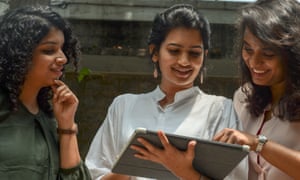
About half of engineering students in India are female. Photograph: Shruti Mukherjee/Getty Images

Razan al-Lawati is a piping engineer from Oman, which has one of the highest proportions of female engineers in the world. While the UK and many western nations have struggled to attract women into engineering, female representation is substantially higher in countries in eastern Europe and the global south. Just 12% of UK engineers are female. This compares with more than 50% in Oman and Malaysia and three in 10 in countries such as Costa Rica, Vietnam and Algeria, according to figures from Unesco.

Razan al-Lawati, Petrofac
Pinterest
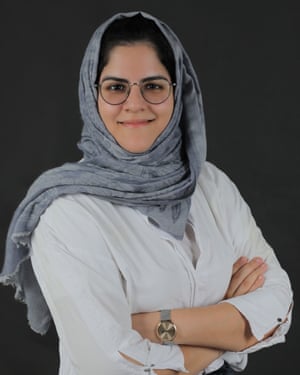
Razan al-Lawati: ‘There is no such thing as a man’s job or a woman’s job – we are all equal’

Al-Lawati works on the graduate development programme for oilfield services company Petrofac and is based in Sharjah in the United Arab Emirates. She says that 40% of the 130 engineers on the graduate programme are women, hailing from countries such as Lebanon, the UAE, India, Oman and Jordan. She is not surprised that more than half of Oman’s engineers are women, as she says the country’s government has made strenuous efforts to promote the subject among women and she was encouraged to follow the profession by careers advisers. She says the eagerness to go into engineering is part of an awakening among Middle Eastern women. “Engineering has always been known as a man’s job and this has created a bit of eagerness and curiosity in females to prove that there is no such thing as a man’s job or a woman’s job and that we are all equal,” she says.

Al-Lawati studied for a BSc in mechanical engineering at the University of Cardiff, where there were only a handful of women on the course compared with 140 men. She thinks British women wrongly believe that engineering means impossible mathematics, tricky physics and physically-demanding work on sites. “I think engineering is totally different to what people believe,” she says.

“You can expand your career in so many ways, you don’t have to be a technical expert, there are so many different sectors you can enter such as contracting, supply chain or working on the business side.” Many of the tasks have been made easier with digital communications. “You can access everything through your laptop so you don’t always have to go to the site for hands-on work. Being online and talking to your supervisor makes it a lot easier,” she says.

Meanwhile, in India, there is a high proportion of women studying Stem subjects at university and one report estimates that about half of engineering students in the country are female.